Beating Alarm Fatigue in Veterinary Anesthesia
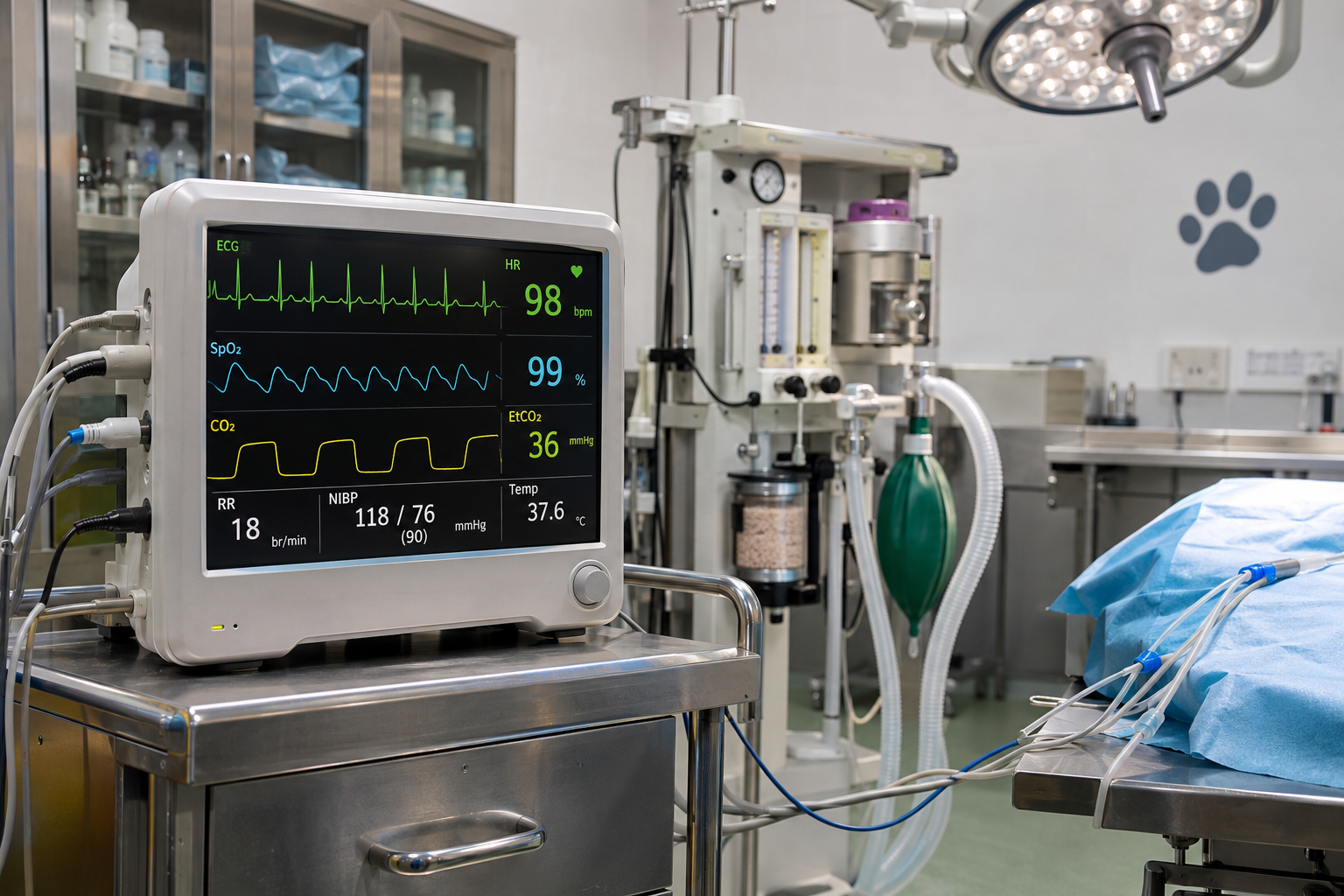
Modern multiparameter monitors are one of the best things to happen to veterinary anesthesia. They can also become the thing everyone stares at while the patient tells a different story.
There is a saying I believe every anesthetist should live by: monitor your patient, not just your monitors. Here is what that looks like in practice.
Why alarms stop working
Alarm fatigue happens when monitors beep so often that people stop reacting. Human medicine treats it as a recognized patient safety problem, and researchers point to two main drivers: the sheer number of alarms and how few of them turn out to need action. A review in Current Opinion in Anaesthesiology describes the same pattern in anesthesia teams. Our monitors work the same way, and so do our teams.
Common causes in a veterinary practice:
- Default limits that do not fit the species, size or procedure.
- Probe artifact, like a pulse ox clip slipping off the tongue during a dental.
- Repeat alarms for a value the team already knows about and is managing.
After enough false alarms, the real one gets silenced too.
Set limits for the patient in front of you
Before induction, take 30 seconds to set alarm limits for this patient. A 3 kg cat and a 40 kg Lab should not share the same heart rate thresholds.
Blood pressure is a good place to start. The 2020 AAHA Anesthesia and Monitoring Guidelines define hypotension as a mean arterial pressure below about 60 to 70 mmHg. Agree on your practice's target and set the alarm to match, so it fires when it matters and stays quiet when it does not.
The hands-on checks that catch what monitors miss
Every few minutes, I recommend checking the patient directly:
- Mucous membrane color and CRT. Pale, gray or slow refill is a warning sign. AAHA notes that a prolonged CRT and weak peripheral pulses signal poor blood flow.
- Pulse quality. Palpate a peripheral pulse. A strong number with a weak pulse is worth a closer look.
- Breathing pattern. Watch the bag and the chest. Look for shallow, rapid or irregular breaths.
- Eye position and jaw tone. These help judge depth, which no monitor reads directly.
- Temperature by touch. Cold feet and ears are a cue to check the probe.
When the monitor and patient disagree
My rule: trust the patient first, then troubleshoot the equipment. If SpO2 drops but the membranes are pink and the pulse is strong, reposition the probe. If the numbers look fine but the patient looks wrong, call the DVM over anyway.
Read trends, not snapshots
One blood pressure of 75 mmHg might be fine. Five readings sliding from 95 to 75 over 15 minutes is a story. That is why the ACVAA guidelines ask teams to record vitals every 5 minutes. I broke those guidelines down in Every 5 Minutes. The trend only exists if someone writes it down.
Build it into the routine
Good intentions fade on a busy surgery day. A few habits make this stick:
- Add alarm limits to your pre-anesthetic checklist. If it is on the list, it gets done before induction instead of after the first false alarm.
- Give one person the anesthesia job. An alarm only helps if someone is free to respond. This is hardest during dentals, which I wrote about in Staffing Anesthesia Safely During Veterinary Dentals.
- Agree on a team rule for silencing. Nobody silences an alarm without first putting eyes and hands on the patient.
- Review alarms that got ignored. If the same alarm keeps firing for no reason, fix the limit or the probe instead of training everyone to tune it out.
The bottom line
Monitors extend our senses. They do not replace them. The best anesthetists I know combine both, and they keep a record that shows how the two fit together.
At Scout, we chart vitals over time so trends jump out at a glance, and your team can log hands-on observations right alongside the monitor values. Learn more
Next from Scout